Where have all the turkeys gone?


Mama turkey flying off the wall into the yard
From July into October we had a family of ferrel turkeys visit almost daily as they liked to roost high in our cottonwood trees. A mama turkey with 8 poults would hop up on the wall, one by one, as part of their daily routine on their way to roost. In July the poults were small and unsure of the world around them. The last time we saw them was October, and they were all big and grown up. We are hoping they are hiding out for the holidays. Happy Thanksgiving!

Poults on the wall back in July contemplating their flight off the wall into the yard to catch up with their mother

October: the band of turkeys, all grown up, take their leave as they walk down our road, off into the sunset

Scratch Coat

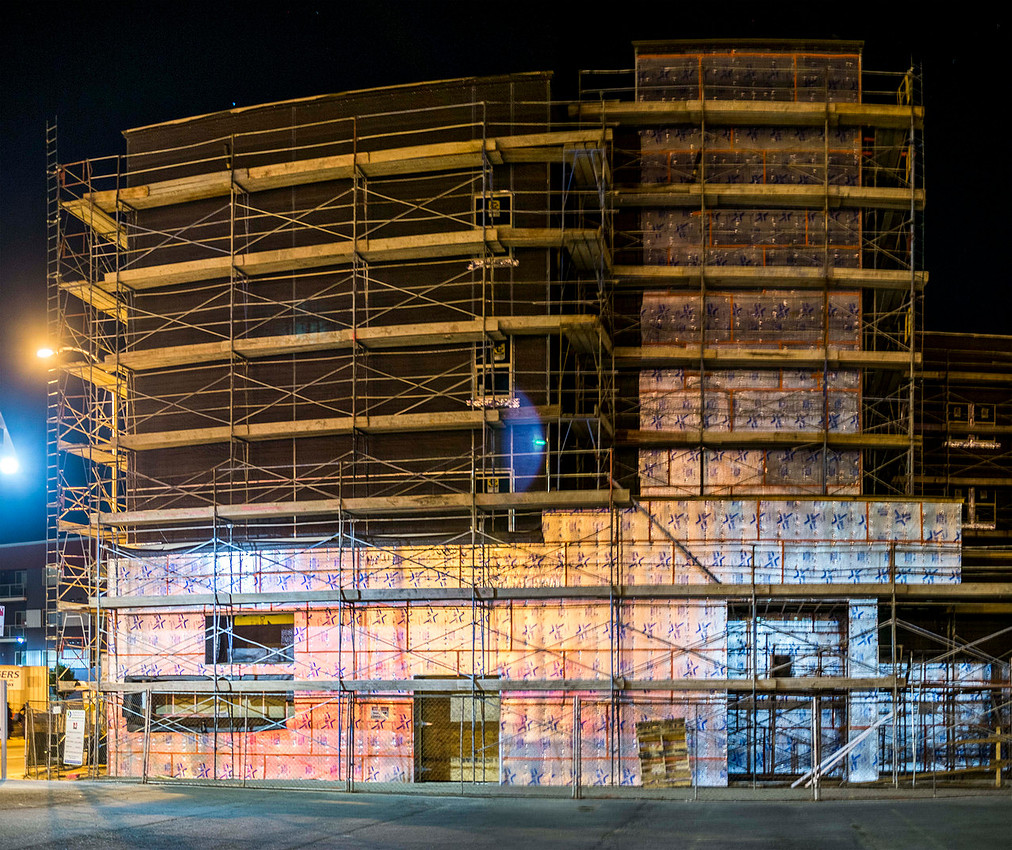
I haven't posted photos of the progress on the Imperial Building recently because there hadn't been a lot of visual changes while they finished tacking tarpaper and chickenwire in the side of the building in preparation for plaster. They had the first coat of plaster, called the "scratch coat", on the east side of the building last Friday. They call it the scratch coat because after the plaster is applied over the chickenwire, which helps hold the plaster on the wall, the plasterer scratches horizontal ribs in the wet plaster. When the plaster dries, the scratches create a hard ribbed surface for the second coat of plaster to cling to. The second coat of plaster is smooth and called the "brown coat" (in older buildings the brown coat often had a brown or sandy color). Together the two coats of plaster form the "scratch and brown" base coat for the final stucco finish.


Cranes after Sundown

I was out on the river just before the Sandias turned pink at sunset. A few cranes flew by as the sun set, but most of them didn't start flying down the river until after sundown. They flew in from the north, wave after wave of cranes, rising in the dusky pink sky until they flew by where I was standing. The colors quickly faded to gray as they crossed the eastern sky under and over the moon on their way into the golden colored sky to the south.


Mesa Verde

Mesa Verde National Park in southwestern Colorado, about 35 west of Durango. Pueblo people lived in these cliff dwelling for 700 years from 600 CE to 1300 CE. Mesa Verde has 600 cliff dwelling is one of the best preserved ancient pueblo sites in the USA.


First Snow

I was in class for three hours last night. I drove through a very light snow on my way to class in Albuquerque's NE Heights. When I got out of class, the sky was clear, there was a sliver moon hanging in the southwestern sky, the parking lot was wet, and my car had bits of snow and frost on it. As I drove north on my way home to Corrales I saw more snow accumulated on the ground, in trees, on plants, and clinging to fences. A half inch of snow was on the ground when I got home.


Hawk at Tent Rocks

This is most likely a red-tailed hawk soaring through the valley below me when I was on top of the mesa at Tent Rocks.


Shiprock

Shiprock is located in the northwest corner of New Mexico in the Four Corners region. The formation is known as a "monadnock" or single rock formation, that rises almost 1600 feet from its surrounding area. The Shiprock was formed about 25 million years ago by volcanic activity. The Navajo refer to it as Tsé Bitʼaʼí which is "winged rock". For many people it looks like and ship and gave it the name Shiprock.


Where the Dinosaurs Roamed

The De-Na-Zin Wildernes area is part of the Bisti Badlands in northwestern New Mexico. There are Hoodoos (rock columns with rocks on top), whole petrified trees lying on the ground, wildly sculpted barren landscapes, sparsely vegetated hills and valleys, and large vistas of multi-colored badlands under deep blue skies. Many dinosaur bones and complete skeletons have been found in the Bisti Badlands. The De-Na-Zin Wilderness area is one of the New Mexico's many natural wonders. According to the BLM webpage on Bisti/De-Na-Zin Wilderness, Bisti is derived from Navajo meaning “a large area of shale hills” and De-Na-Zin are Navajo words for "Cranes".

Hoodoos

Petrified tree


Barren, sculpted landscape

Petrified trees


Hoodoos that once supported a petrified tree. The petrified tree eventually fell apart, leaving the pedestals that had eroded under it.


Saint Francis Rock. Some say this rock in the foreground looks like a statue of Saint Francis of Assisi.
